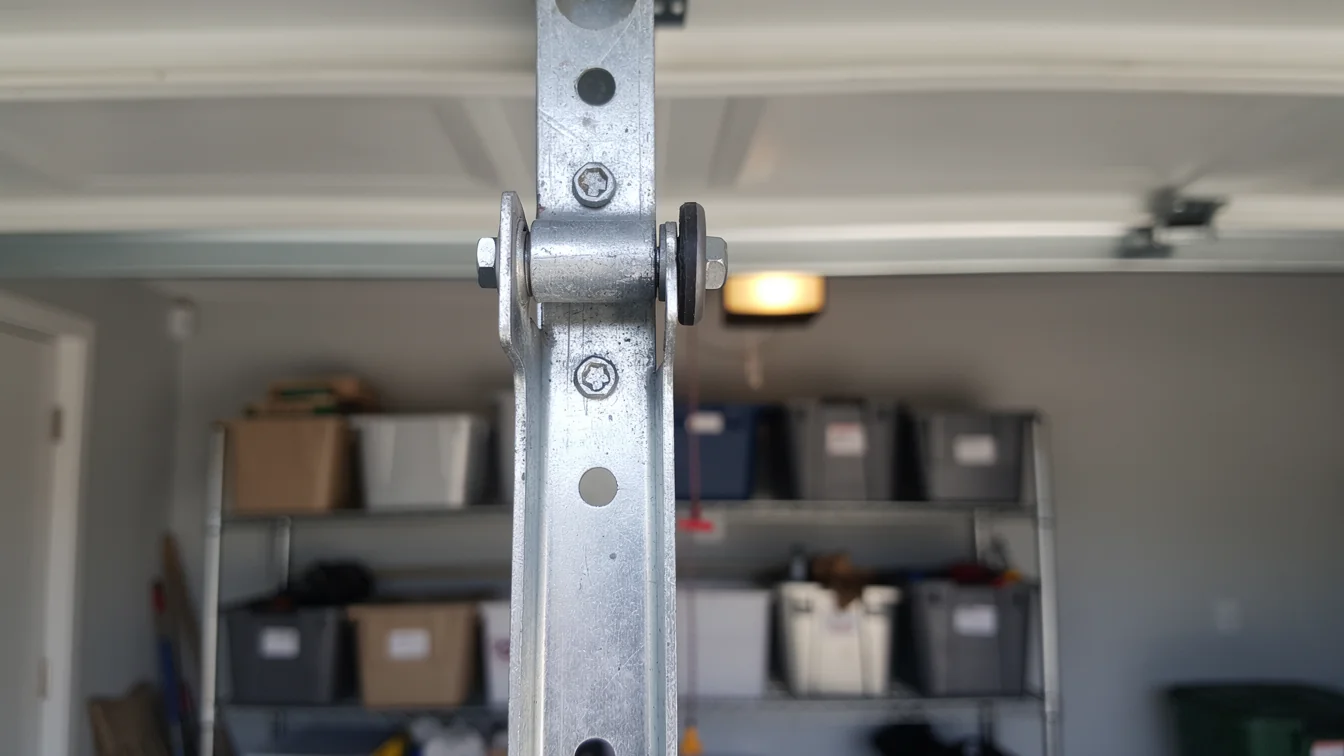
Local detail
What the Weather Here Does to It
Buda sits in a moderate heat climate band, not the kind of extreme swing that cracks concrete slabs or warps steel overnight. But moderate heat still means long stretches of hot afternoons that bake vinyl roller stems and dry out track lubricant faster than owners expect. A track that runs dry doesn't squeak politely - it lets the roller chatter sideways with every open and close cycle, and that side-to-side play is exactly what walks a door off its rail. This isn't a dramatic weather event causing sudden failure. It's slow, cumulative heat exposure doing what it does to rubber and grease over years, and most owners don't notice until the door is already grinding at one corner. Because the heat band here is moderate rather than severe, we don't see the fast hardware failures that coastal or desert climates get. What we see instead is gradual drift - tracks pulling a few degrees out of plumb, brackets loosening a turn at a time. It's a maintenance problem before it's an emergency, which is good news if you catch it early and bad news if you don't look until the door won't move.
The area
What Is Going On
Most of the housing stock across this service area went up between 1980 and 2014, with a lot of it clustered in the 1980s and 90s across the named subdivisions nearby - Shady Hollow, Village at Western Oaks, Onion Creek among them. That matters because it means most garage doors here are still running original or first-replacement extension or torsion hardware from that same era, not the heavier, better-isolated track brackets you'd find on newer builds. A door built to 1990s spec typically has track bolted to wood framing with lag screws, not the steel jamb brackets more common in newer construction. Wood framing moves - it shrinks, swells, and over 30-plus years those lag screws back out a fraction at a time. Once a bracket loosens even an eighth of an inch, the track is no longer running true vertical, and a roller under spring tension will find that gap and ride out of it. We see this most on doors that have never had the track bolts checked, which is most of them, because nobody thinks to check bolts on a door that still opens fine. The fix is often just re-anchoring the bracket, but by the time a door jumps track, a roller or a hinge is usually bent too and needs replacing alongside it.
What we find
What You Pay
We don't have a flat number to quote here, and we wouldn't trust a page that gave you one before looking at your door. What drives the cost on an off-track repair is how much got bent in the process - a door that slips off cleanly and gets caught early is a bracket re-anchor and maybe a roller. A door that kept trying to run after it jumped usually bends a track section, a hinge, or both, and those get replaced rather than straightened. Given the household income levels we see across this area, most owners here are choosing full hardware replacement over patchwork repair when a door's original 1980s-90s track and rollers are already near end of life - it tends to be the better value once you're already paying for a service call. We'll tell you straight if your situation is a quick fix or if you're better off replacing the whole roller and track set rather than paying twice.
How we work
When to Get Help
Call before the door comes fully off the rail, not after. The warning signs are a roller that clunks at the same spot every cycle, a door that looks slightly crooked when it's halfway up, or a track bracket you can wiggle by hand. Any of those on a door from the 1980s-2014 building stock common here means the hardware is past due for a look, even if the door still technically opens. One honest limit: if a door has already jumped track and someone kept running the opener trying to force it back, we often find a bent track section that has to be replaced outright - there's no straightening steel track back to true once it's kinked. That's not a repair we can talk you out of needing. If the door is still on its rail but running rough, that's the cheaper call to make, and the one worth making this week instead of next month.
Talk to a local pro
Garage door trouble in Buda?
Same-day service with honest, upfront quotes.