Local detail
What the Weather Here Does to It
Buda sits in a moderate heat climate band, not the freeze-thaw country that cracks concrete and snaps hardware up north. That matters because the damage here comes from sustained warmth, not sudden cold shock. Steel panels expand and contract through long hot stretches, which dries out factory lubricant on hinges and rollers faster than a cooler climate would. Nylon rollers from the 1980s and 90s, the era most of this housing stock was built in, get brittle under repeated heat cycling and start chattering in the track long before they visibly crack.
Opener electronics take a hit too. Circuit boards in garage-mounted units sit in the hottest part of the structure, and heat is the main thing that shortens their working life, more than age alone. If your opener is original to a house built anywhere in that 1980 to 2014 window, the board has already absorbed thirty-plus summers of attic-adjacent heat.
What doesn't happen much here is the ice-dam or deep-freeze failure mode you'd read about from a colder state. Don't spend money weatherproofing against a freeze that isn't the thing wearing your door out. The heat is.
The area
What Is Going On
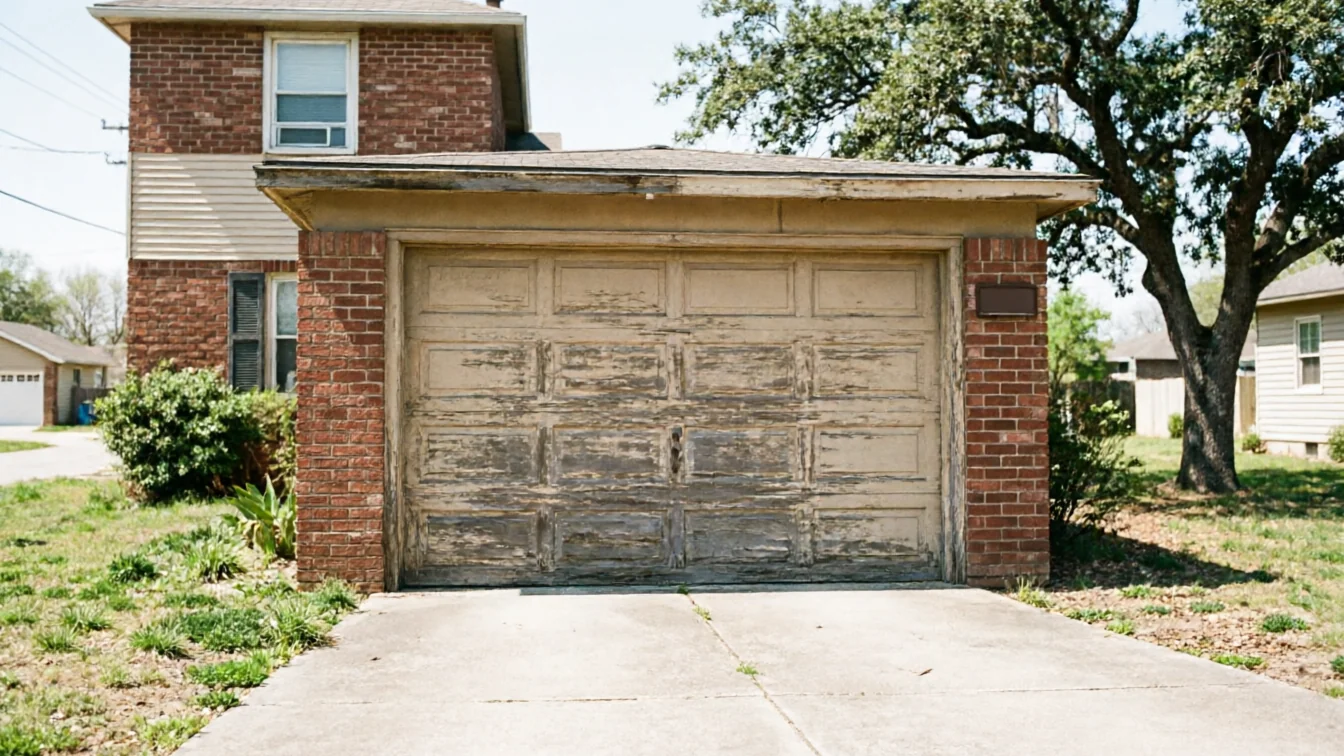
Most garage doors in this area went up between 1980 and 2014, with the bulk of the housing stock concentrated in the 1980s and 90s and a median build year around 1993. That means a large share of doors still in service are original equipment, carrying the torsion springs, cable drums, and chain-drive openers the builder installed.
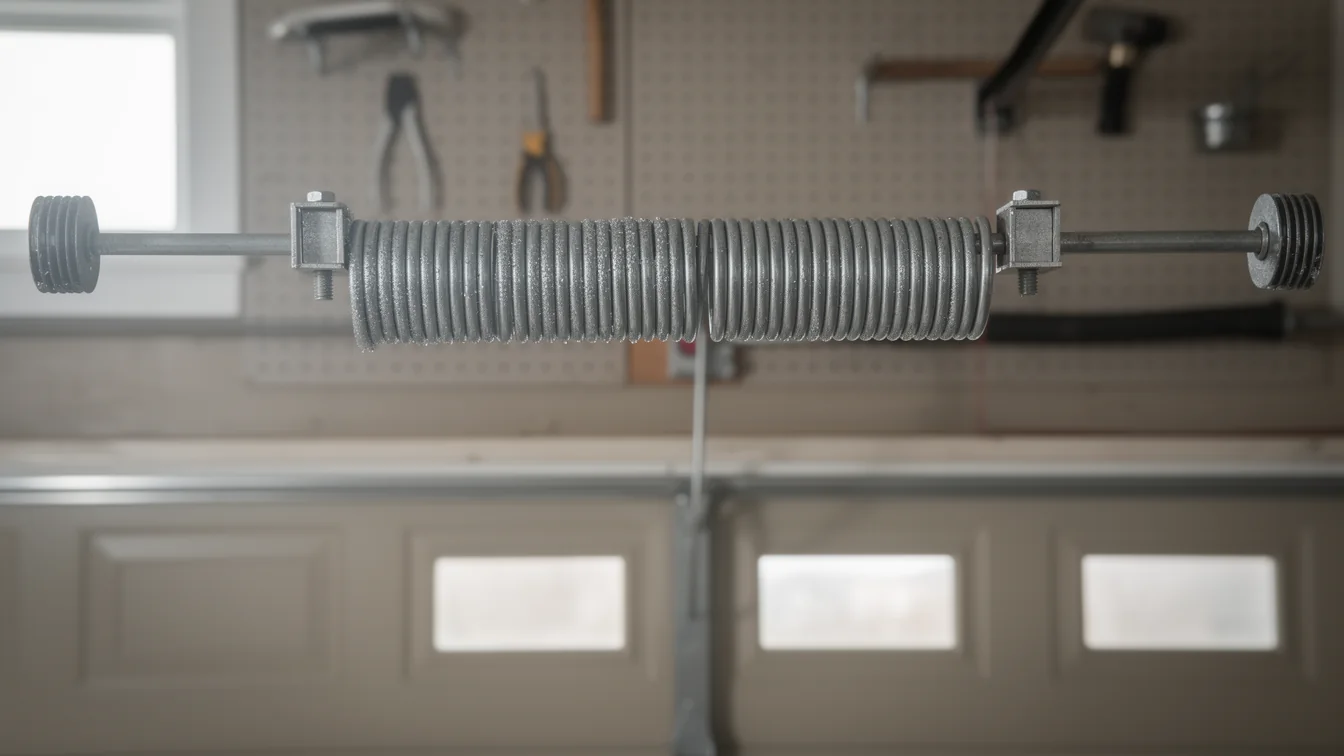
Torsion springs are rated in cycles, not years, and a spring installed in 1991 has almost certainly outlived its rated cycle count regardless of how it looks. When it lets go, it's usually sudden, not gradual. What looks like a dead opener is often a spring that's lost tension, forcing the motor to do a job it was never sized for, which then burns out the motor too.
Across the roughly 25,093 households and 13,733 owner-occupied houses in this part of the service area, the common thread we see is doors nobody's touched since the original installation. No annual service, no spring swap, just use until something breaks. That's not unusual, it's just worth knowing before you assume a sluggish door means a full replacement.
What we find
What You Pay
We don't publish a flat price list here because what a job costs depends on what's actually failed and whether parts for your door's era are still common stock. What we can tell you is what drives the decision in this market. With a median household income of $109,630 in the area, we see more owners choose to replace an aging door outright rather than keep repairing one piece at a time, especially once a torsion spring, the opener, and the rollers are all past their working life in the same visit.
That's a financial call each household makes differently, and we're not going to tell you replacement is always the smarter spend. A single broken spring on an otherwise sound door, especially one from the newer end of the 1980-2014 range, is almost always a repair, not a replacement. It's when three or four systems are failing at once on a door built in the early part of that window that the math usually tips toward new.
Ask for the breakdown on your service call. A legitimate repair quote should separate labor from parts so you can see what you're actually paying for.
How we work
When to Get Help
Call before a spring fully lets go if you can. A torsion spring that's visibly stretched, or a door that's gotten noticeably heavier to lift by hand, is telling you it's near the end. Waiting for total failure usually means the cables or drums take damage too, which turns a single-part fix into a bigger one.
Honest limitation: we don't stock every obsolete part for doors from the early end of this area's 1980s building wave. Some original hardware from that period isn't made anymore, and if your track or drum is a discontinued size, there can be a lead time on getting a compatible replacement rather than an exact match. We'll tell you that up front rather than make you wait to find out.
If your opener is original to a house built in the 1980s or early 90s and the board has already been replaced once, it's usually not worth a third repair. If it's a door from the newer half of that range with one failed part and sound panels, that's a straightforward call for a truck, not a decision you need to agonize over.
Talk to a local pro
Garage door trouble in Buda?
Same-day service with honest, upfront quotes.